To view this page in another language, please click here:
"The world is full of stories, and from time to
time
they permit themselves to be told."
Old Cherokee Saying
I will draw thorns from your feet.
We will walk the White Path of Life together.
Like a brother of my own blood, I will love
you.
I will wipe tears from your eyes.
When you are sad, I will put your aching heart
to rest.
Cherokee
Traveler's
Greeting
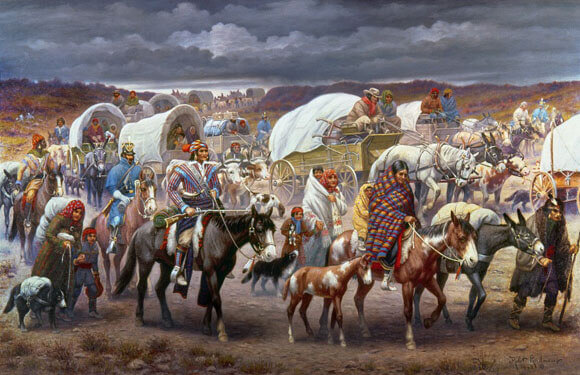
"We are now about to take our leave
and kind farewell to our native land,
the country that the Great Spirit gave our
Fathers,
we are on the eve of leaving that
country that gave us birth...it is with
sorrow
we are forced by the white man to
quit the scenes of our childhood...
we bid farewell to it and all we hold
dear."
"We are now about to take our leave
and kind farewell to our native land,
the country that the Great Spirit gave our
Fathers,
we are on the eve of leaving that
country that gave us birth...it is with
sorrow
we are forced by the white man to
quit the scenes of our childhood...
we bid farewell to it and all we hold
dear."
Charles Hicks, Tsalagi (Cherokee) Vice Chief on the Trail of Tears, August 4, 1838
"Many proposals have been
made to us to adopt your laws, your
religion,
your manners and your customs. We would be
better pleased with beholding
the good effects of these doctrines in your
own practices, than with hearing you talk
about them".
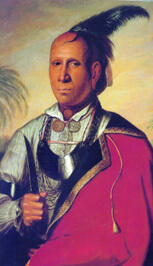
Old Tassel, Chief of the Tsalagi (Cherokee)
"Whole Indian Nations have melted away like snowballs in the sun before the white man's advance. they leave scarcely a name of our people except those wrongly recorded by their destroyers. Where are the Delewares? they have been reduced to a mere shadow of their former greatness. We had hoped that the white men would not be willing to travel beyond the mountains. Now that hope is gone. they have passed the mountains, and have settled upon Tsalagi (Cherokee) land. they wish to have that usurpation sanctioned by treaty. When that is gained, the same encroaching spirit will lead them upon other land of the Tsalagi (Cherokees). New cessions will be asked. Finally the whole country, which the Tsalagi (Cherokees) and their fathers have so long occupied, will be demanded, and the remnant of the Ani Yvwiya, the Real People, once so great and formidable, will be compelled to seek refuge in some distant wilderness. there they will be permitted to stay only a short while, until they again behold the advancing banners of the same greedy host. Not being able to point out any further retreat for the miserable Tsalagi (Cherokees), the extinction of the whole race will be proclaimed. Should we not therefore run all risks, and incur all consequences, rather than to submit to further loss of our country? Such treaties may be alright for men who are too old to hunt or fight. As for me, I have my young warriors about me. We will hold our land."
Chief Dragging Canoe, Chickamauga
Tsalagi (Cherokee)
"I believe it is in the power of the Indians unassisted, but united and determined, to hold their country. We cannot expect to do this without serious losses and many privations, but we possess the spirit of our fathers, and are resolved never to be enslaved by an inferior race, and trodden under the feet of an ignorant and insolent foe, we, the Creeks, Choctaws, Chickasaws, Seminoles, and Tsalagi (Cherokees), never can be conquered..."
Confederate General Stand Waitie, Tsalagi (Cherokee)
"By peace our condition has been improved in the pursuit of civilized life."
Tsalagi (Cherokee) Stories
Âgän-uni'tsï's
Search For the Uktena
Anisga
ya Tsunsdi
Anitsutsa
- the Boys
Asgaya
Gigagei
Atagâ'hï,
the Enchanted Lake
Atagâ'hï
- the Secret Lake
Atsi
la-wa I
Atsil-dihye
gi
Awi
Usdi, the Little Deer
Baby
Song, To Please the Children
Ball
Game Between the Birds and the Animals
Ball
Game of the Birds and the Animals
Battle
Between Two Worlds
Bean
Bread or Tsu-Ya-Ga
Bear
Legend
Bear
Man
Bear
People
Bigfoot
Bird
Blue
Jay's Skinny Legs
Black
Raven
Buffalo
and the Wolf
Cherokee
Christmas
Cherokee
Prophecy
Cherokee
Creation Story
Cherokee
Medicine Man
Cherokee
Taboos
Cherokee
Trail of Tears found
at Coke Ovens
Cherokee
women
Coming
Of Light
Corn
Dance
Corn
Maiden and Lucky Hunter
Cowee
Town
Creation
By Women
Creation
story Cherokee
Creation
Story Cherokee
Cycle
of the Seasons
Dancing
Drum
Dance
of the Blue Blanket
Daughter
of the Sun
Di-S-Qau-Ni
(chestnut bread)
Doe
and Raven
Dogwood
Clan
Eagle
and the Snake
Eagle
Feather
Eagles
revenge
Earth
making
Escape
Of the Seneca Boys
Fairies
False
Warriors Of Chilhowee
Faries
Feathered
serpent
Fire
Ceremony
First
Bear Song
First
Contact with Europeans
First
Contact With Whites
First
Fire
Firstman
and Firstwoman
Fish
Story
Flint
Visits the Rabbit
Four
Legged Nations
Four
Wind Messengers
Government
Grandmother
Spider Steals the Sun
Grandmother
Turtle and the Story of the Creation
Great
Buffalo Lick
Great
Teacher
Hemp-carrier
Herbert's
Spring
Herbology
Herbs
Common to the Cherokee Country
Hero
with the Horned Snakes
Hiadeoni,
the Seneca
How
Deer Got His Horns
How
Dragging Canoe Got His Name
How
Grandmother Spider Brought Fire to the
People
How
Rabbit Stole Otter's Coat
How
the Bluebird and Coyote Got their Color
How
the Cherokee Learned the Rattlesnake
Prayer Song
How
the Deer Got His Horns
How
the Honey Bee got their stinger
How
the Kingfisher Got His Bill
How
the Milky Way Came To Be
How
the Partridge Got His Whistle
How
the Rabbit Stole the Otter's Coat
How
the Red Bird Got His Color
How
the Terrapin Beat the Rabbit
How
the Turkey Got His Beard
How
the Wildcat Caught the Gobbler
How
the World Was Made
How
they Brought Back the Tobacco
How
Turtle's Back was Cracked
How
We Got Fire
Humming
Bird Lore
Hummingbird
Brings Back Tobacco
Hunter
and the Uksu'hï
Hunter
In the Däkwä'
Ice
Man
Illustration
Of the Tabu
Important
Dates in Cherokee History
In
the Beginning
Incidents
Of Personal Heroism
Indian
Fry Bread
Indians
visit London
It's
A Bird
James
Mooney
John
G. Burnetts
Story of the Removal of the Cherokees
Journey
Of the Cherokees
Kana'sta,
the Lost Settlement
Kama'ti
and Selu
Ka-ma-ma:
the Butterfly
Kana'tï
And Selu: the Origin Of Game And Corn
Kana'ti
and Selu
Kanagagota
(Standing Turkey)
Kanati
the Hunter and the Cave of Animals
Kanuchi
Keeper
of the Animals
Keetoowah
History and Prophecy
Last
Day of Roland the Cherokee
Laurel
Clan
Legend
of Stone Coat, Nvyvnuwi
Legend
of the Cedar Tree
Legend
of the Cherokee Rose
(nu na hi du na tlo hi lu i)
Legend
of the Cherokee Sweet Shrub
Legend
Of the Keetoowah
Legend
of the Kituwah
Legend
of the Tlanuhwa and the Uhktena
Legend
of the Wren
Legend
of Uktena
Life
Song
Little
Boy and the Rattlesnake
Little
Men
Little
People
Little
People Lore
Little
People of the Cherokee
Long
Trail To "Sandy Creek"
Long
years ago
Lookout
"the Story of a Mountain"
Lost
Cherokee
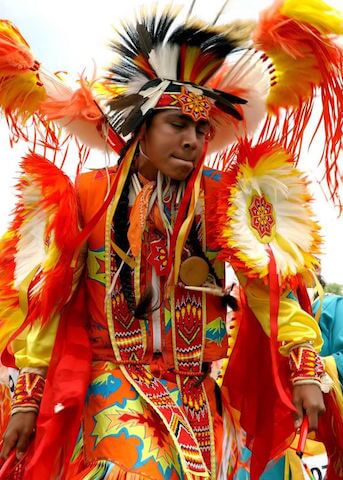
Many
Cherokee Following Ancient Traditions
Of Balance And Harmony
Marbles
Marriage
Of the North And the South
Massacre
Of the Ani'-kuta'ni
Medical
Practice
Medicine
Man
Medicine
of Plants
Medicine
Wheel
Milky
Way
Monster
With the White Eye's
Moons
New
Bow for Tani
New
Legend For the People
Nest
of the Tla'nuwa
Nûñ'yunu'wï,
the Stone Man
Origin
of Disease and Medicine
Origin
of Strawberries
Origin
Of the Pleiades And the Pine
Raid
On Tïkwäli'tsï
Return
of Ice Man
Origin
of Bears
Rock
Cave Clan
Sacred
Numbers, the Circle, And Corn
Sacred
Pipe
Saligugi
(the Mud Turtle) and the Storyteller
Selu
the Corn Mother and the Deer
Spear
Finger, U'tlu ta
Spiritual
Views and Traditions of the Cherokee
Stone-Shield
Story
of Creation
Story
of Fire
Story
of the Flute
Story
of Tobacco
Tears
of the Children
Terrapin's
Escape from the Wolves
The
Deluge
The
Directions
The
First Fire
The
Ice Man
The
Journey To the Sunrise
The
Legend of Uktena
The
Magic Lake
The
Moon And the Thunders
The
Rabbit Goes Duck Hunting
The
Rattlesnake in the Corn
The
Rattlesnake's Vengeance
The
Snake Boy
The
Spirit Of Little Deer
The
Story of the Groundhog Dance
The
Uktena And the Ulunsu'ti
Tsalagi
Creation Story
Tsuwe'nähï:
A Legend Of Pilot Knob
Two
Dogs
Uktena
and the Ulûñsû'tï
Underground
Panthers
Ûñtsaiyï',
the Gambler
U`tlûñ'ta,
the Spear-finger
Walking
Alone
What
the Stars Are Like
Where Eagles Fly
Why
Mole lives underground
Why
Rabbit Has a Short Tail
Why
the Bullfrog's Head Is Striped
Why
the Buzzard's Head Is Bare
Why
the Mink Smells
Why
the Possum's Tail is Bare
Why
the Sun Follows the Moon
Why
the Turkey Gobbles
Wisdom
Wolfs
revenge
Yahula
Yun
wi Ama yine hi
Cherokee
Stories Collection
Stories
as told by a Cherokee
Other Stories
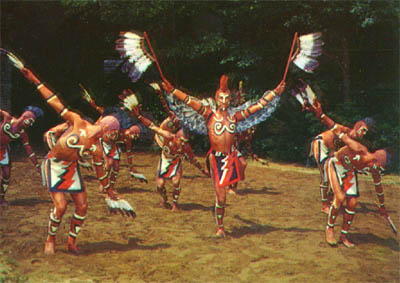
Other
Cherokee
Pages
All
about the Cherokee Font
Ancient
Cherokee Rulers
Basic
Greetings, and useful phrases
Cherokee
Art Gallery
Cherokee/Choctaw
- Indian Chestnut Bread
Cherokee
Heritage Center
Cherokee
History
Cherokee
Language
Cherokee
Link Newsletter
Cherokee
Online Language Class
Constitution
Of the Cherokee Nation
Corn
Meal Mush
Chief
Dragging Canoe
Cherokee
Moons
George Catlin: Natives'
portraits
Great
New Moon Ceremony
History
of the Cherokee Indians
Houses
Laws
of the Cherokee Nation
Local
Legends Of Georgia
Local
Legends Of North Carolina
Local
Legends Of South Carolina
Local
Legends Of Tennessee
Official
Web Site of the Cherokee Nation
Other
Cherokee History Resources on the Web
Roaming
Buffalo
Seven
Cherokee Ceremonies
Translate
English word into Cherokee
Tsalagi
Creation Story
Tsalagi
Language Resources
Tsalagi
Myths and Legends
Tsalagi
(Cherokee) Web Ring
United
Keetoowah Band of Tsalagi (Cherokee)
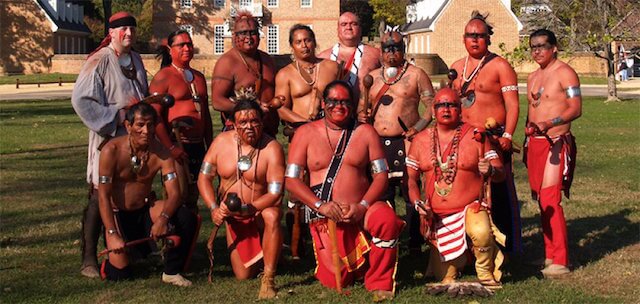
Tsalagi (Cherokee)
{chair'-uh-kee}
The Tsalagi (Cherokee) are a nation of North American Indians that formerly inhabited the mountainous region of the western Carolinas, northern Georgia, and eastern Tennessee. An Iroquoian-speaking people, they originally lived near the Great Lakes they migrated to the Southeast, eventually becoming the largest and most powerful group in that region. their traditional culture included maize agriculture, settled villages, and well-developed ceremonialism. In 1827 the Tsalagi (Cherokee) established a constitutional form of government.
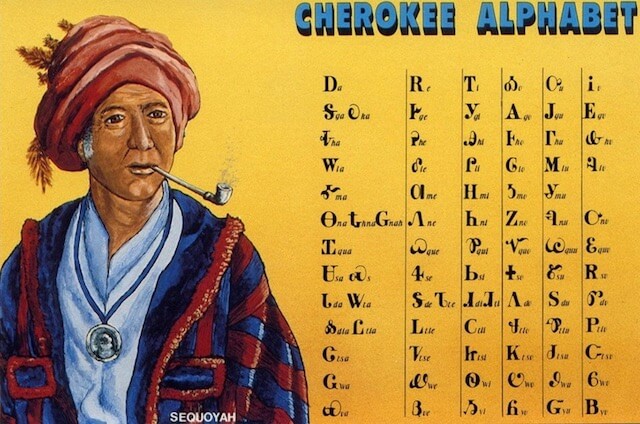
the first explorers of the Southeast discovered the most talented Indians north of Mexico. Builders, agriculturists, artisans, fishermen, and hunters epitomized especially the Tsalagi (Cherokees)' varied skills. Knowledgeable in herb culture, they developed useful medicines from them that are still used today. they also developed environmental concepts about ecological thought and survival. We are blessed by the legacies of Tsalagi (Cherokee) oral traditions, providing ethnologists with opportunities for cultural interpretations: legends about man, animals, supernatural deities, witches, and other evil influences. their most famous leader, Sequoya, believing literacy provided power to the white man, alone developed the Tsalagi (Cherokee) alphabet (c.1820), and became immortalized when his name was given to Sequoia National Park in California.
A series of fraudulent, land-acquiring treaties were imposed on the Tsalagi (Cherokee) in the 1830s. the Treaty of New Echota (1835), in which a small tribal faction sold 2.83 million ha (7 million acres) of Tsalagi (Cherokee) land, required their removal westward within 3 years. the vast majority of the Tsalagi (Cherokee) Nation repudiated this document, but under Gen. Winfield SCOTT, most remaining Tsalagi (Cherokee) were driven from their land and forcibly marched to Arkansas and Indian Territory (now Oklahoma) in 1838-39. About 4,000 of the more than 15,000 Tsalagi (Cherokee) who made the journey died of disease and exposure.
In Indian Territory, they joined the CHICKASAW, CHOCTAW, CREEK, and SEMINOLE to form the so-called FIVE CIVILIZED TRIBES. Tribal lands were lost in the 1860s, after the Five Tribes sided with the South during the Civil War, and again in the early 1880s, when the federal government abolished tribal ownership of lands. When Indian Territory became the state of Oklahoma in 1907, all tribal lands were opened for white settlement.
In the 1980s, 43,000 persons of Tsalagi (Cherokee) descent lived in eastern Oklahoma; about 15,000 of these are considered full-blooded. the Tsalagi (Cherokee) who avoided the forced removal of 1838 escaped into the Great Smoky Mountains and resettled in North Carolina, where they formed a tribal corporation in 1889. Tsalagi (Cherokee) on or near the reservation in North Carolina numbered 6,110 in 1987.
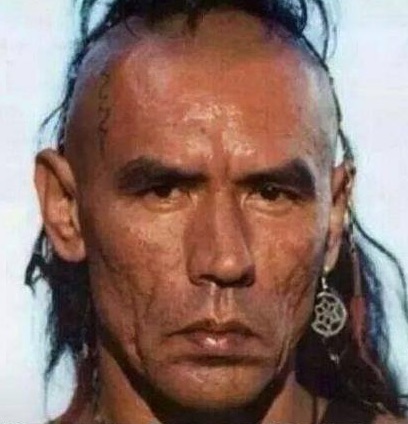 |
||
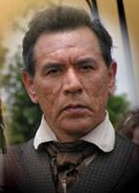 |
One of
today's
best-known actors, Wes Studi, is Tsalagi (Cherokee) and can be contacted through his band, Firecat of Discord. |
 |
 |
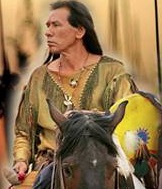
Another well-known actor, Burt Reynolds, is also Tsalagi (Cherokee).

(Click to hear Burt)
the Tsalagi (Cherokee) Language Font
Cherokee
(Tsalagi) Language Syllabary

Character Names
---------------------
|
e ge he le me ne que se de te tle ye o go ho lo mo no quo so do |
tlo tso wo a ga ha la ma na qua sa da yo yu yv wa ya ka hna ta i |
gi hi li mi ni qui si di ti tli tsi wi yi u gu hu lu mu nu quu su |
du tlu tsu wu v gv hv lv nv quv sv dv tlv tla nah s dla tsa tsv wv tse we |
Universities Teaching the Tsalagi (Cherokee) Language
UNIV. OF TULSA
DEPT OF LANGUAGES
TULSA, OK 74104
(918) 631-2332
Attn: MELVYN C. RESNICK
WESTERN CAROLINA UNIV.
CULLOWHEE, NC 28723
(704) 227-7241
Attn: SUZANNE MOORE
Tsalagi (Cherokee) Bulletin Boards (BBS)
Tsalagi (Cherokee) Nation
(508)452-2082 96 90:324/296(N)
New Cherokee Phoenix (704)497-5898 24
1:379/601(F), 90:379/601(N)
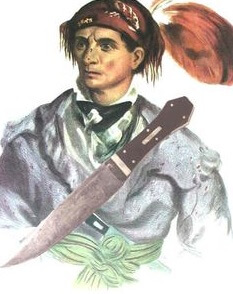
Tahchee, Tsalagi (Cherokee) guide
Cherokee Blessing
May the warm winds of Heaven blow softly
on your home,
And the Great Spirit bless all who enter
there.
Tsalagi
(Cherokee) Book Titles
 Return to
Indigenous Peoples' Literature
Return to
Indigenous Peoples' Literature
Compiled by: Glenn
Welker
ghwelker@gmx.com
This site has been accessed 10,000,000 times since February 8, 1996.